Episode Transcript
[00:00:00] Speaker A: They all laughed at Christopher Columbus when he said the world was round.
They all laughed when Edison recorded sound.
They all laughed at Wilbur and his brother when they said that man could fly.
They told Marconi wireless was a phony. It's the same old crime.
[00:00:20] Speaker B: Welcome back to 100 Years of Television, where for 100 weeks that started in October 2025, we're going to recall the top 100 milestones in the first 100 years of television and video.
The countdown will culminate on September 7, 2027, the 100th anniversary of the day television was invented.
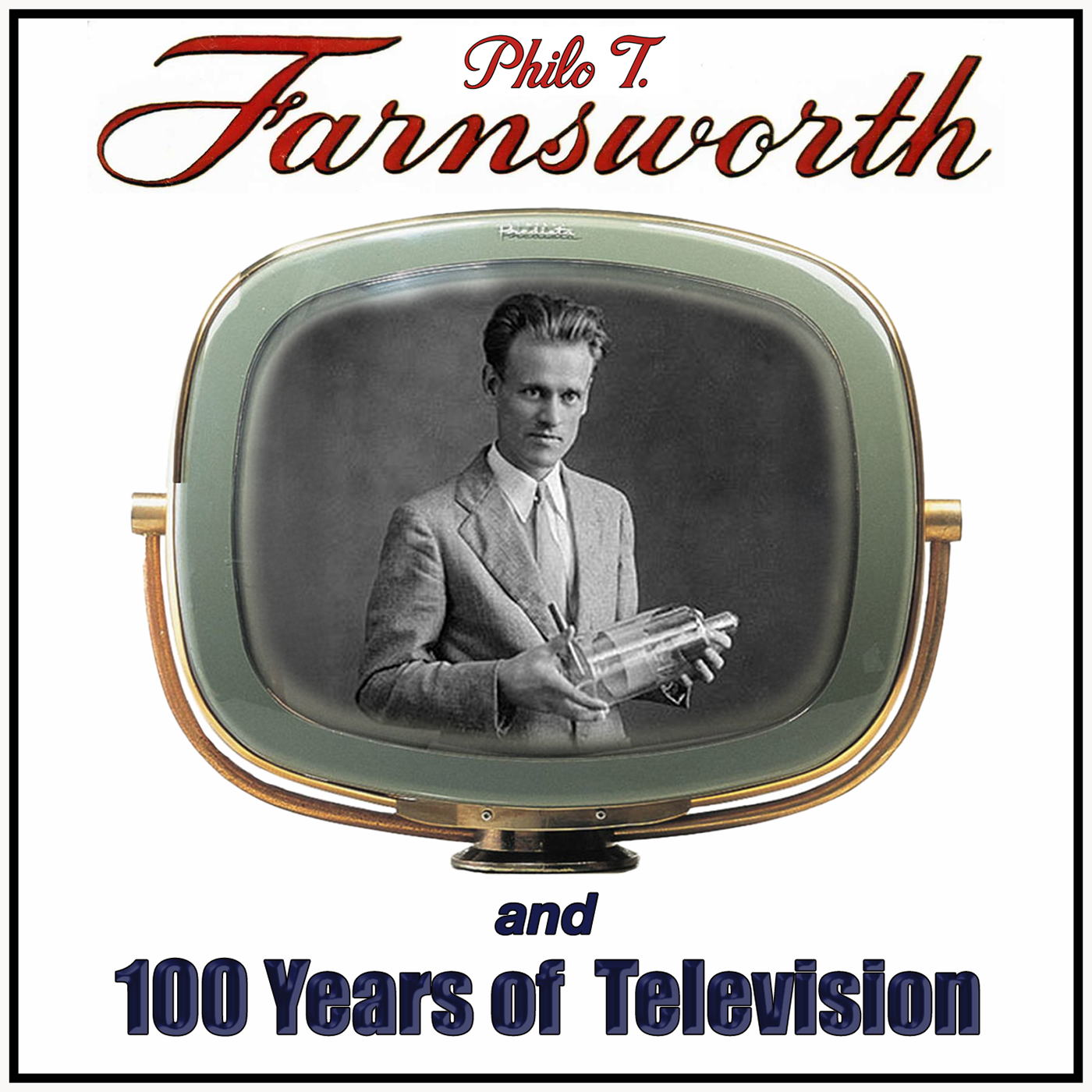
I'm Paul Schatzkin, author of the Boy who Invented Television, the definitive biography of Philo T. Farnsworth, who invented the world's first all electronic television system in the last episode. Julia, the first situation comedy to feature a black actress in the starring role, premiered on NBC in the fall of 1968.
Today countdown number 43 takes us where no TV has gone before.
William Shatner knew what he had to do. Just go cross eyed.
The script for an upcoming episode of Star Trek called for Captain Kirk to take Lieutenant Uhura, played by the black actress Nichelle Nichols, in his arms and kiss her.
That set off the usual alarms at NBC about how the Southern affiliates would react to what would be the first interracial kiss ever written into an American network drama.
The network's first idea was to frame the shot so that the camera never showed the actor's lips actually touching.
Star Trek creator Gene Roddenberry offered a cover. The scene from two angles, one showing the actual kiss and one without it and deferring the final decision for the editing room.
As Nichelle Nichols recalled in interviews over the years, they shot the kiss first, then came the takes without it. And in every one of them, William Shatner looked straight into the camera and crossed his eyes or found some other way to wreck the shot.
When the footage finally reached the editor, there was only one take he could use.
The episode, entitled Plato's Step Children, complete with Kirk and Uhura's kiss, aired on November 22, 1968.
By then, television was deeply woven into the fabric of American life.
The events of 1968 had shown that TV was no longer a novelty or a mere appliance. It was the spinal cord of the nation's central nervous system that Star Trek was on the air at all. Took a former bomber pilot with a grudge against the Pentagon, a studio board that wanted to scrap the whole thing, and one red headed comedienne who overruled them.
The man who took television into the 23rd century started out flying B17s and riding TV Westerns Eugene Roddenberry was born in El Paso, Texas, and grew up in Los Angeles, where his father was a police officer.
He flew 89 combat missions during World War II, then worked as a commercial pilot after the war.
In 1949, Roddenberry returned to Los Angeles and, following in his father's footsteps, became an officer with the LAPD.
He started to write scripts for television, but the LAPD discouraged moonlighting, so his first submissions used the pseudonym Robert Wesley.
After leaving the police force, Roddenberry began his climb up the Hollywood ladder. For two years he was the head writer on the popular Western series have Gun Will Travel, starring Richard Boone as Paladin, a four hire gunfighter described in the show's theme song as a knight without armor in a savage land.
Roddenberry bolstered his resume as a series creator with the Lieutenant, an hour long Dr.
Aired on NBC in the 1963-64 season. Set at Camp Pendleton near San Diego, California, the lieutenant was quick to catch on with viewers, often beating CBS's Jackie Gleasonhauer in the ratings.
But filming at the actual Camp Pendleton proved problematic when Roddenberry chafed at the restrictions imposed by the Pentagon.
Much of what the Pentagon objected to were the very things Roddenberry most wanted to write contemporary issues like race war and the moral ambiguities of life in the military.
That's how Gene Roddenberry's clashes with the Pentagon in the mid 20th century inspired Star Trek and the voyages of the USS Enterprise, a starship roaming the outer reaches of the galaxy. In the 23rd century, Roddenberry knew there was no way either the network or the Pentagon could send a liaison 300 years into the future for his new show. Roddenberry's pitch included an allusion to the successful anthology series Wagon Train, which ran on NBC from 1957 to 1962 and then on ABC from 1962 to 1965.
The popular show was written around a regular cast that occupied a mobile set, the wagon Train that visited new locales, characters and situations every week. That was precisely the model Roddenberry envisioned for Star Trek.
When his friend, the screenwriter Samuel Peoples, heard the Wagon Train analogy, he told Roddenberry that his idea was simply Wagon Train to the stars.
After several studios rejected the idea, it landed on the desk of Herb Solo, whose judgment Lucille Ball had come to trust after she bought out Desi Arnaz's share of Desilu Productions.
Cbs, the network that aired I Love Lucy passed on Star Trek because the network was already developing a science fiction show called Lost in Space.
But NBC was intrigued enough to order a pilot filmed at the end of 1964. The cast included Jeffrey Hunter as Captain Christopher pike, commanding officer, and two actors who'd been cast in episodes of Lieutenant Leonard Nimoy as Mr. Spock, the science officer, and Majel Barrett as one Captain Pike's first officer, who was identified only by her rank.
The pilot episode, entitled the Cage, was delivered to NBC in February 1965 and summarily rejected by network executives as too cerebral.
The network also objected to the number one character, so certain were they that TV audiences would never accept a woman as second in command of any kind of vessel, let alone an intergalactic starship.
The network also expressed concerns about the devilish looking Mr. Spock.
Still, the network remained sufficiently intrigued to take the unusual step of ordering a second pilot.
Roddenberry insisted on keeping the Spock character, but relented on number one.
The other big change in cast was the role of the captain of the starship.
Jeffrey Hunter's wife insisted that the handsome actor should be a movie star and encouraged him to disembark from the fledgling Enterprise to pursue a feature film career.
That left the captain's chair open for a new captain, James Tiberius Kirk, the role filled by William Shatner, the second pilot. The second pilot, called where no Man Has Gone before, was filmed in July 1965 and delivered in February 1966.
NBC then ordered 29 episodes for the season that would start the following fall.
But before the starship Enterprise could leave the dock, Starfleet Command nearly scuttled the entire mission.
The bean counters and suits at Desilu knew one thing after shooting not one, but two pilots.
As television shows go, Star Trek promised to be a very expensive proposition.
Since the 1950s, much of network television programming was produced using a formula known as deficit financing.
The network paid a licensing fee that covered roughly 80% of a show's actual production cost. For the privilege of airing a program once in the regular season and again as a summer rerun.
That left it up to the production company to finance the difference.
But after those two network airings, the producer retained all the rights for syndication, foreign sales, merchandising, and any other form of exploitation they could dream up, the producers had to pony up 20% of the production cost. But once the deficit was covered, the producers were on the gravy train.
The problem for Star Trek was that each of the 29 episodes NBC ordered was budgeted at $200,000, somewhere between 15 and 30% more than the average hour long television drama of the era, the Wagon Train to the Stars required building an exotic spaceship interior from scratch, complex optical effects, custom props and costumes, and new Alien Planet sets, costumes and makeup for every episode, elements that Gene Roddenberry insisted were essential for the show to succeed.
If the network was paying 80%, then Desilu was on the hook for roughly $40,000 for each episode, or almost 1.2 million for the entire season.
And that was on top of NBC having picked up another show that Herb Solo brought to desilu, Mission Impossible, that had similar budgetary issues.
The potential losses were so perilous that desilu's board of directors nearly sold the Starship Enterprise for scrap.
When it came to a vote in February 1966, almost the entire board of directors of Desilu Productions voted to abandon Star Trek, despite the fact that NBC had already ordered those 29 episodes.
But as chairwoman of the board and the studio's largest shareholder, Lucille Ball had the power to override her board.
Despite the vote, Lucy simply nodded her head toward Herb Solo and the Enterprise was cleared for launch.
One of the dissenting votes on the board, studio accountant Edwin Holley, later conceded, if it were not for Lucy, there would be no Star Trek.
The voyages of the Starship Enterprise, with its multinational and multi ethnic crew seated around Captain Kirk on the bridge, began at 8:30pm on Thursday, September 8, 1966.
The critical reception was mixed at best. New York Times critic Jack Gould called Star Trek an astronomical soap opera that suffers from interminable flight. Dragon.
After an initial blast off in the ratings, the show slowly fell back to Earth.
By the end of its first season, Star Trek's average ratings put it in 52nd place.
For the second season, NBC moved it to the Friday 8:30pm time slot, making it difficult for the young viewers the show most attracted.
The third season was moved to Fridays at 10pm A time slot tantamount to a slow motion cancellation.
As it cruised the galaxy, the Enterprise had no trouble finding extraterrestrial situations that resonated with life down here on Earth.
Race was woven through the series from the start.
The multicultural crew included Nichelle Nichols, a Black American, as Lt. Uhura, the communications officer, and George Takei, a Japanese American, as Lieutenant Sulu, the helmsman.
The casting of Nichols and Takei were deliberate provocations. A black woman and a Japanese American in positions of authority on the bridge of a starship at a time when black Americans were still marching for the right to vote.
By its third season, the show had earned a reputation for pushing boundaries on race or war and gender. But no episode was more controversial than the 10th episode of the third season.
In Plato's Stepchildren, Kirk and his crew respond to a distress signal from the planet Plaitonius, where a race of telekinetic humanoids forced the crew to act out for their amusement.
When NBC executives read that the script called for the white Captain Kirk to embrace and passionately kiss the black lieutenant Uhura, the usual alarm bells went off regarding how those pesky Southern affiliates might react to the first interracial kiss on network television.
Roddenberry and the network wrestled over the coverage, but in the end there was only the footage that Shatner hadn't ruined. And Plato's Stepchildren, complete with Kirk and Uhura's Kiss, aired on November 22, 1968.
You have to wonder what all the fuss was about.
As Nichelle Nichols recalled, the deluge of hate mail the suits at NBC anticipated never materialized.
Instead, as Robert Thompson, a professor of television and popular culture at Syracuse University, put it, that KISS neither got the backlash one might have expected, nor did it open the doors for for lots more shows to do this.
After Plato's Step Children, only 14 more episodes of the original Star Trek series aired before the final episode, Turnabout Intruder, aired on June 13, 1969.
After just three seasons, the show was canceled and the USS Enterprise returned to its base to be decommissioned.
But a funny thing happened on the way to the scrapyard.
The mathematics of syndication gave Star Trek a chance to find the audience that had eluded it on the network.
The rule of thumb in the late 1960s was that a show needed at least 78 episodes to be a viable candidate for syndication.
That was enough to give local stations six reruns a week across a 26 week cycle without repeating.
And after its three seasons on NBC, there were a total of 79 episodes of Star Trek.
The first indication that the reruns were finding a new audience appeared on college campuses.
The daily afternoon reruns of Star Trek became something of a dorm room staple, as students returning from class would turn on the tv, pass a joint around and settle in for an episode aboard the enterprise before VCRs, DVDs, or streaming. When watching TV was still a communal experience, those daily Star Trek reruns became something of a countercultural touchstone.
Over several decades, the revival resulted in feature films and a slew of spin off series that continue to this day.
Star Trek would never have made it to the network without a defiant nod from the first female president of a Hollywood studio.
But after just three modestly successful seasons, rather than vanishing into the cosmos, the show that went where no man had gone before became one of the most successful franchises in entertainment history.
This brings us to the end of number 43 in the countdown of the top 100 milestones in the first 100 years of television.
Stay tuned for the next episode when CBS fires the Smothers Brothers.
Thanks for listening to 100 Years of Television, a two year countdown to the centennial of television on September 7, 2027.
For more, aim your gizmo to 100yearstv.com this podcast was written, recorded and edited, engineered and uploaded by me, Paul Schatzkin and is a production of Farnovision.com if television was invented by somebody named Farnsworth, why don't we call it Farnovision?
[00:18:18] Speaker A: They all said we never would be happy. They laughed at us and ha.
But ho ho ho, who got the laughs out now.