[00:00:00] Speaker A: They all laughed at Christopher Columbus when he said the world was round they all laughed when Edison recorded sound they all laughed at Wilbur and his brother when they said that man could fly they told Marconi wireless was a phony it's the same old cry welcome back
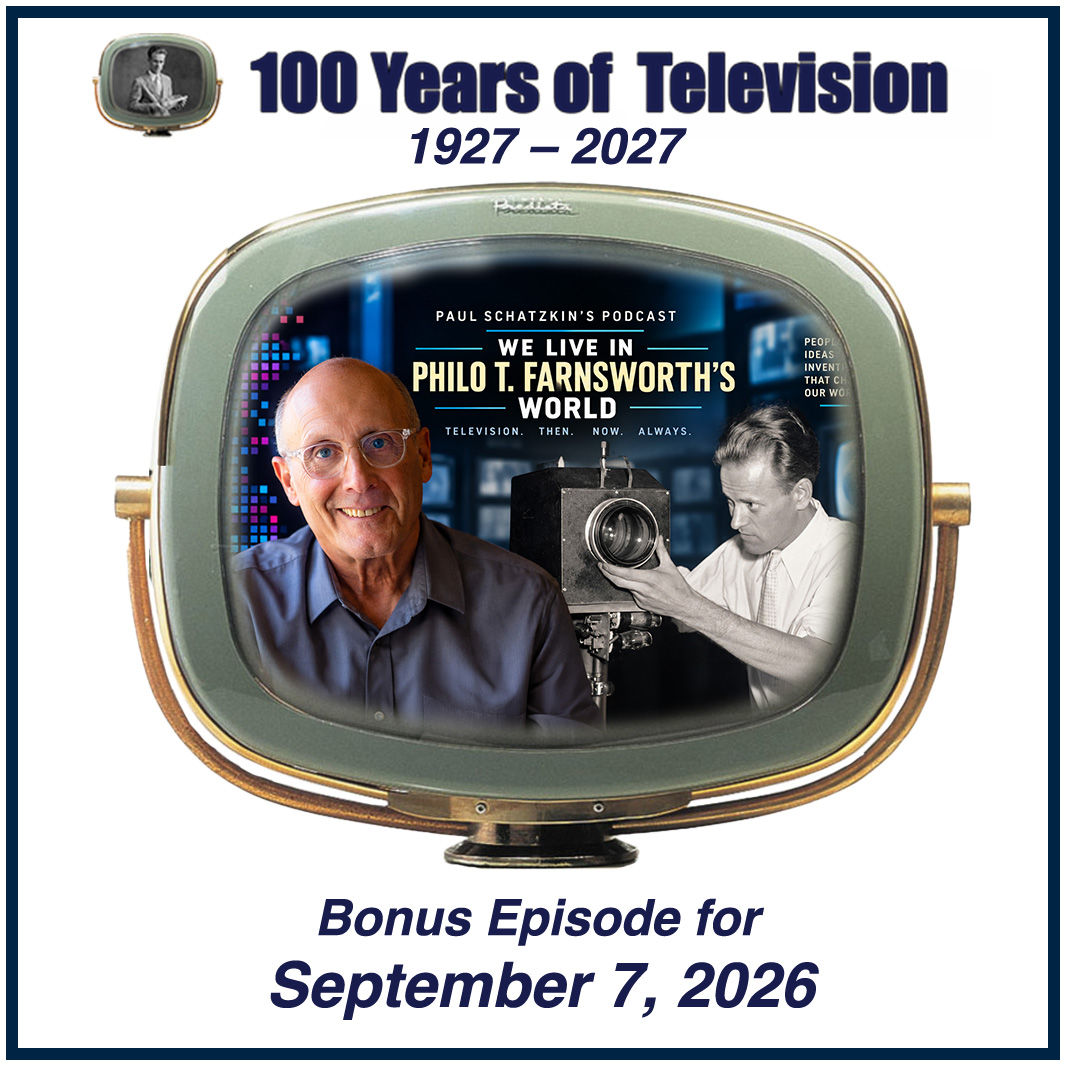
[00:00:21] Speaker B: to 100 Years of Television, where for 100 weeks it started in October 2025.
We're going to recall the top 100 milestones in the first 100 years of television and video.
The countdown will culminate on September 7, 2027, the 100th anniversary of the day television was invented.
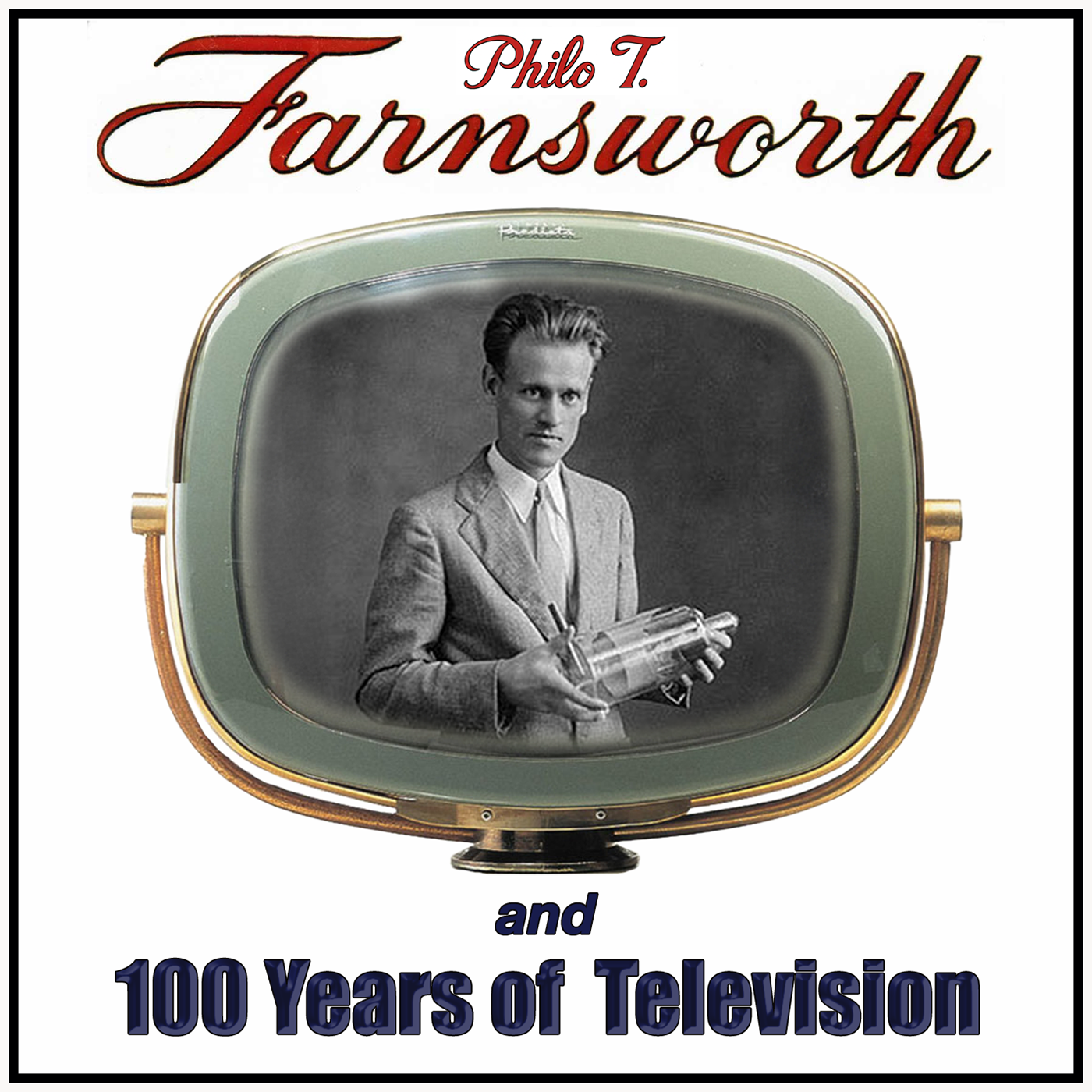
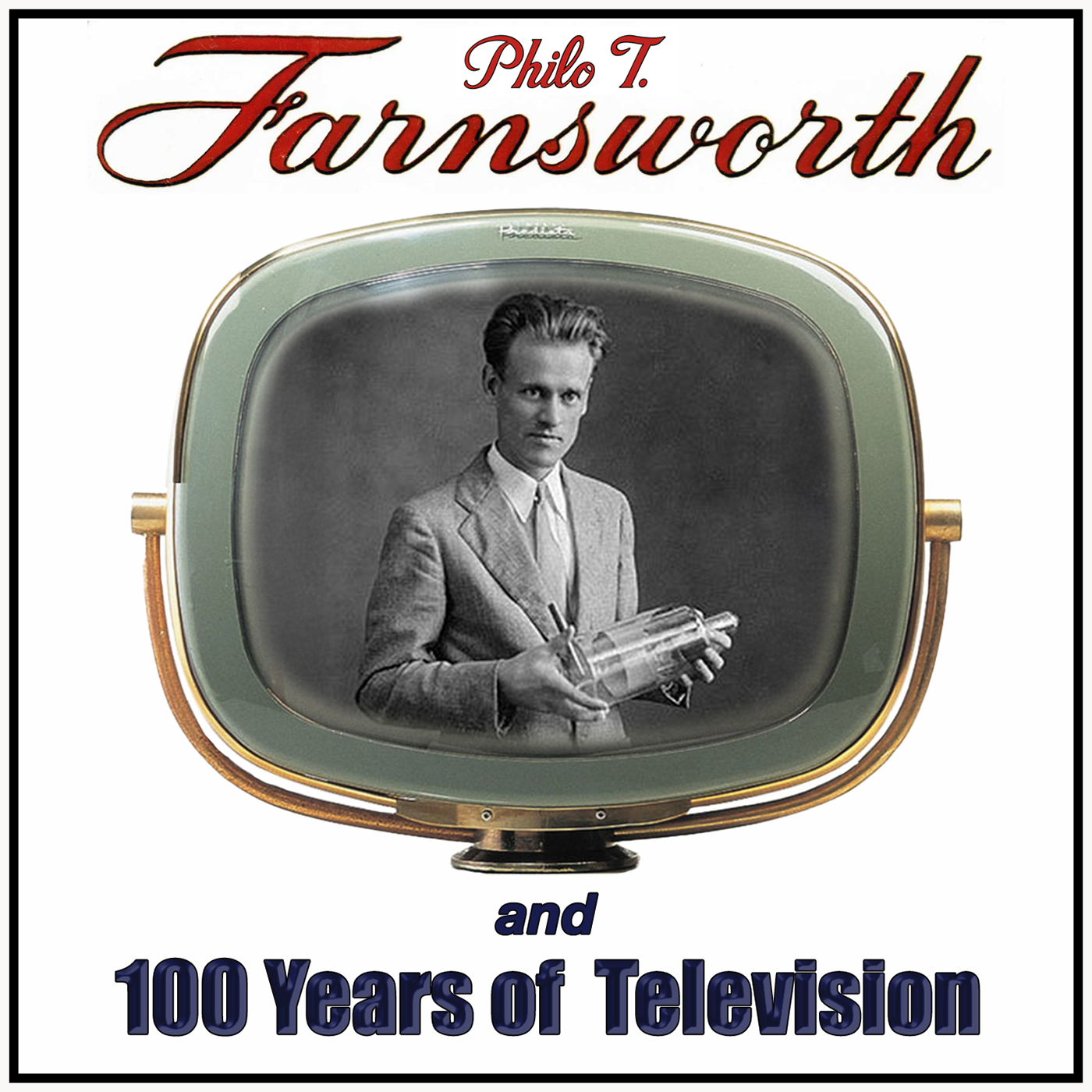
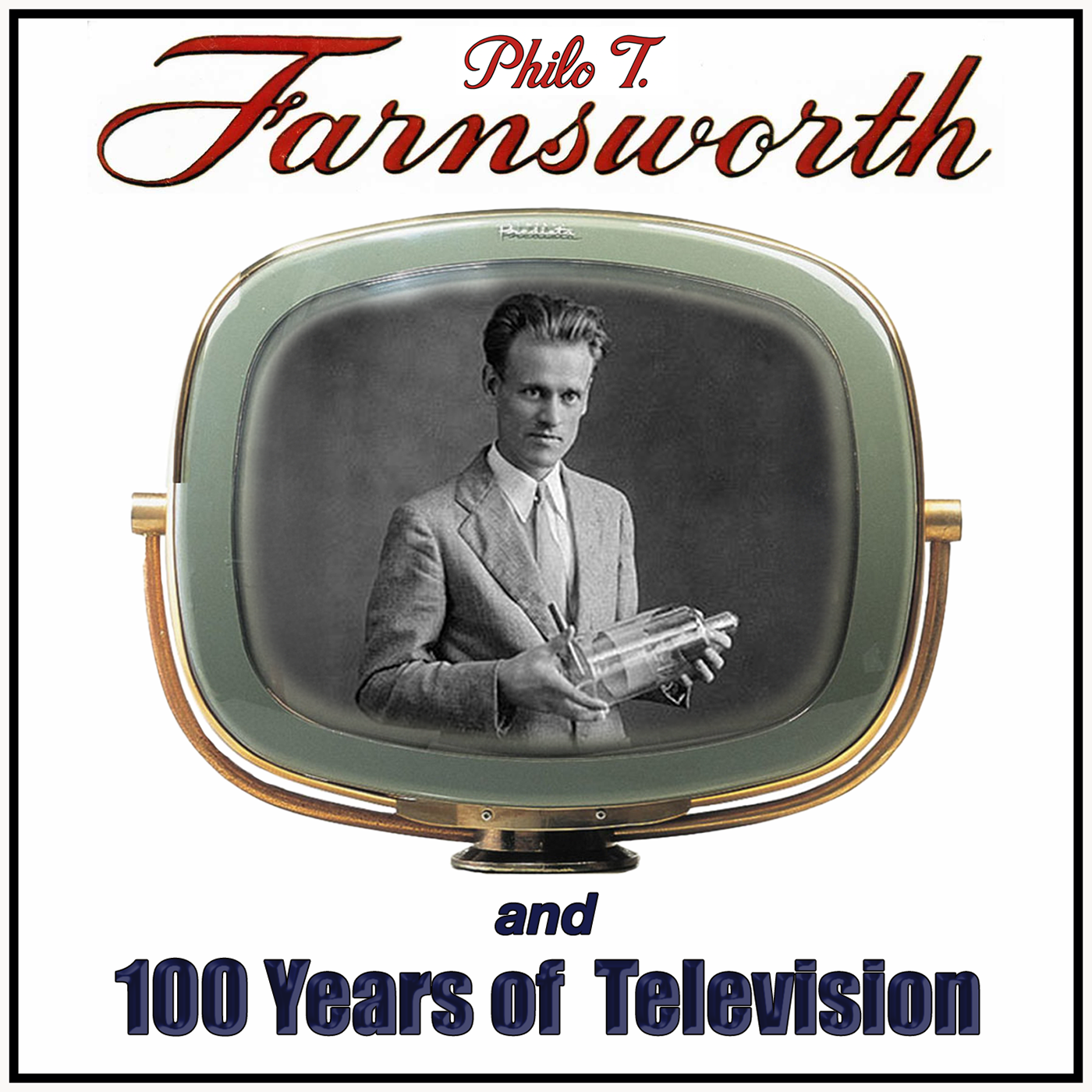
I'm Paul Schatzkin, author of the Boy who Invented Television, the definitive biography of Philo T. Farnsworth, who invented the world's first all electronic television System.
Today is September 7, 2026.
So in addition to the weekly milestone already posted, we're adding this bonus post to recognize the midpoint in the countdown.
Because Today is the 99th anniversary of the pivotal event we are here to celebrate. And that means that there is now exactly one year to the centennial itself.
What follows here is a short Essay noting this 99th anniversary that has been posted to my personal substack account as well as the centennial
[email protected] the post is entitled Christopher Nolan Made the Wrong Damn Movie and assumes that the reader is reading the post on a digital display.
It begins, there is exactly one year left until the centennial of television.
99 years ago today, September 7, 1927, something happened in a loft in San Francisco that set the cornerstone for the world that we live in today.
How are you reading this? You're reading it on a screen, right?
We live in a culture that is awash with screens.
It seems that everything we do now, every form of commerce, culture and communications, involves some kind of screen.
We conduct all our business on screens.
We spend our days at work staring at screenshots. Then we go home for some relaxing downtime and more screens.
They come in all sizes, from the tiny screens we carry in our pockets to the wall sized panels in our living rooms, to the jumbotrons at stadiums and concerts.
And we take it all for granted.
But it was not always this way. And there was in fact one moment 99 years ago that put this entire transformation into motion.
Here is the fact that has been lost to history.
This entire screen based culture that we are immersed in today started on this day in 1927.
The proof can be seen in a short video clip recorded at a recreation of the 1927 event staged for the 50th anniversary in 1977, which is accompanied by this audio from the NBC News coverage of the event.
[00:03:44] Speaker C: With a single line of light being beamed into an electronic dissecting tube.
And from another tube, a cathode ray tube, the simple image, the straight line, being hazily reproduced.
The world's first all electronic transmission of television.
[00:04:03] Speaker B: By now, anybody who knows me knows who and what I'm talking about.
I've only been hammering on this theme for, oh, 50 plus years now.
Something vital has been lost to history.
One of the seminal geniuses of the 20th century has been left out of the storyline.
His name was Philo T. Farnsworth.
He was born in 1906. Importantly, the year after Albert Einstein published four, four scientific papers that altered human understanding.
Despite growing up on a farm in Idaho, Philo T. Farnsworth had an innate understanding of Einstein's strange new universe.
And he was uniquely gifted to put that understanding to work in a way that changed the world as much as anything that has happened over the past 100 years.
At some early age, Philo confessed to his father his heart's desire that he had been born an inventor.
And then he seized on a popular idea floating around at the time.
It seemed inevitable in the first decades of the 20th century that motion pictures and radio would somehow merge to send moving pictures through the air.
So television, young Philo reasoned, might be a handy thing to come up with to launch his career as an inventor. And that is exactly what he did.
At the time, the great minds of science and industry were wrestling with 19th century solutions to a 20th century problem by converting light into electricity by mechanical means.
But what the moment demanded was somebody who could take ideas like Albert Einstein's and transform them into something previously unimaginable.
So this teenager in a farm in Idaho taught himself everything he could about electrons and cathode ray tubes.
He immersed himself in the theories of relativity and quantum mechanics.
And for the purposes of inventing television, he absorbed the first of Einstein's 1905 papers, which described the photoelectric effect, the process by which light becomes electricity.
In the summer of 1921, the same year Einstein was awarded the Nobel Prize for The photoelectric effect, 14 year old Farnsworth was struck with what must have been a divine inspiration.
Rather than scanning the light reflected off an object, he would create an electrical counterpart to the optical image and then scan the electrons emanating from that invisible electrical image.
It all seems so obvious now, but at the time, the idea was simple, elegant and entirely novel.
So novel, in fact, that Nobody came up with a similar idea that worked for another 10 years.
In the late winter or early spring of 1922, the teenager who wanted to invent television drew a sketch for his high school science teacher, which you can see in the post on the centennial website.
Every video screen on the planet can trace its origins to that sketch.
Five years later, with seed financing from some bankers and industrialists in San Francisco, Farnsworth successfully tested the first working model of the technology we take for granted today.
That fuzzy picture on September 7, 1927, was television's big Bang moment.
It was more than just another invention. It was an epic breakthrough in what humans could do with the fundamental forces of nature.
And everything since, from I Love Lucy to, well, the gang on the Big Bang theory, from Pong to the iPhone, became possible on that day.
Albert Einstein published four seminal theories in 1905.
In the fourth paper, the thought process that began with converting light into electricity delivered him to the theory that defines the strong nuclear force in the most famous equation ever written. E equals MC squared.
So television emerged from the same well of cosmic knowledge that also gave us nuclear power and atomic bombs.
When Christopher Nolan was promoting his 2023 blockbuster biopic, he would often say in interviews that because of the specter of nuclear annihilation, we live in Oppenheimer's world.
But unless we all have an atomic bomb in our pocket or in our living room, we we really live in Philo Farnsworth's world. And Christopher Nolan made the wrong damn movie.
We are now exactly one year from the centennial of a pivotal moment in human history. And the clock is ticking.
It's time we recognize the occasion for all that it means to our understanding of the world that we live in.
That's why I have been counting down to the centennial by recalling the top 100 milestones in the first 100 years of television and video.
The countdown began on September 7, 2025.
I've already posted some 60 episodes. They average roughly 12 minutes each and have all kinds of interesting and amusing anecdotes from your favorite memories of television and video.
Now, I have an ask for all of you who are listening. Won't you help us spread the word? Don't just like this post, please share it on your social media or if you're on substack, find a pithy quote and restack it.
Let's mount a global commemoration of the day video arrived on the planet and celebrate the countless ways its invention has enriched our lives.
And if it has already been shared with you, then you know what to do.
Thanks for listening to this bonus episode of 100 Years of Television, a two year countdown to the centennial of television on September 7, 2027.
For more, aim your gizmo to 100yearstv.com this podcast was written, recorded, edited, engineered and uploaded by me, Paul Schatzkin and is a production of Farnovision.com if television was invented by somebody named Farnsworth, why don't we call it Farnovision?
[00:11:10] Speaker A: They all said we never would be happy. They laughed at us and ha.
But ho ho ho, who got the laughs right now?