Episode Transcript
[00:00:00] Speaker A: They all laughed at Christopher Columbus when he said the world was round they all laughed when Edison recorded sound.
They all laughed at Wilbur and his brother when they said that man could fly.
They told Marconi wireless was a phony. It's the same old crime.
[00:00:20] Speaker B: Welcome back to 100 Years of Television, where for 100 weeks it started in October 2025.
We're going to recall the top 100 milestones in the first 100 years of television and video.
The countdown will culminate on September 7, 2027. That's the 100th anniversary of the day television was invented.
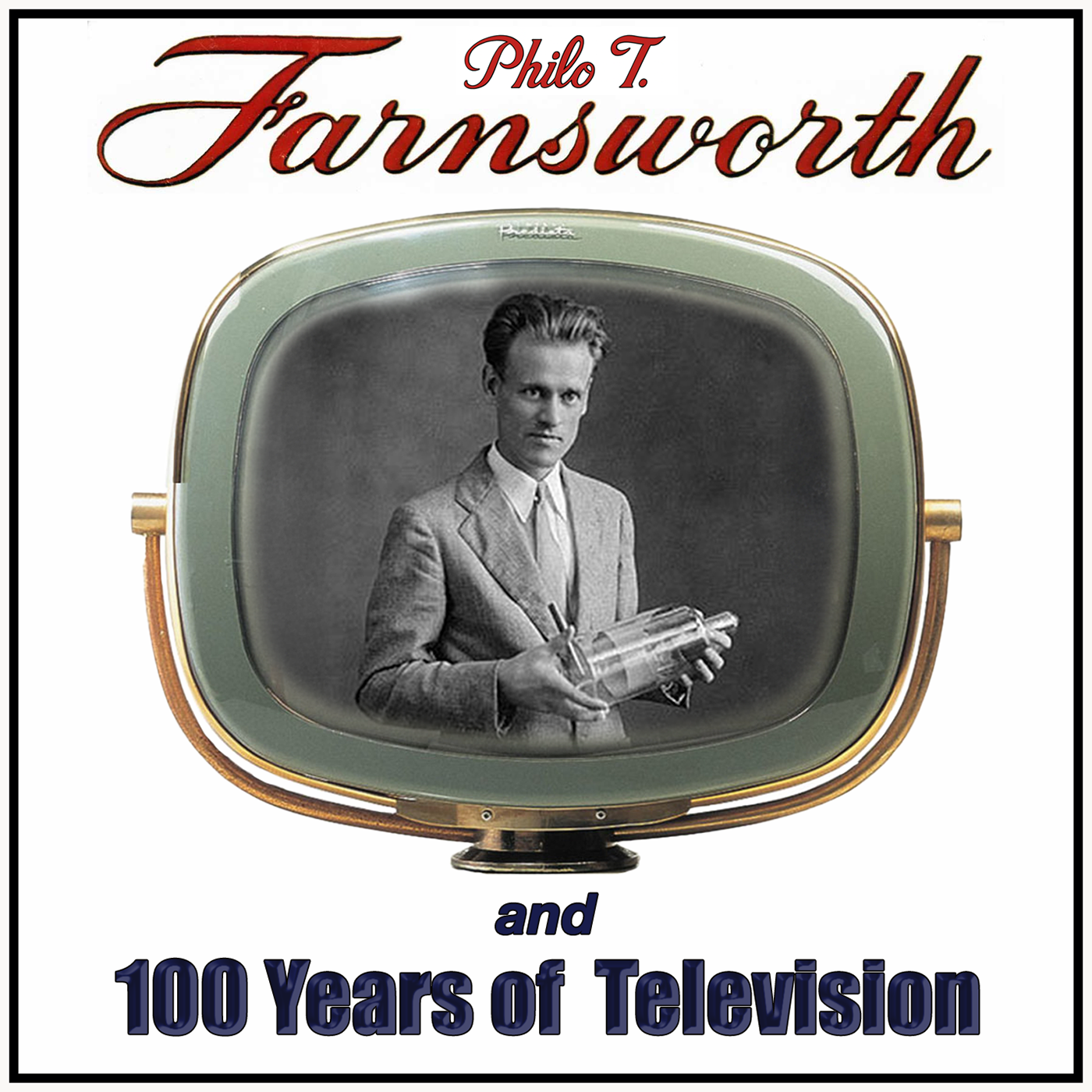
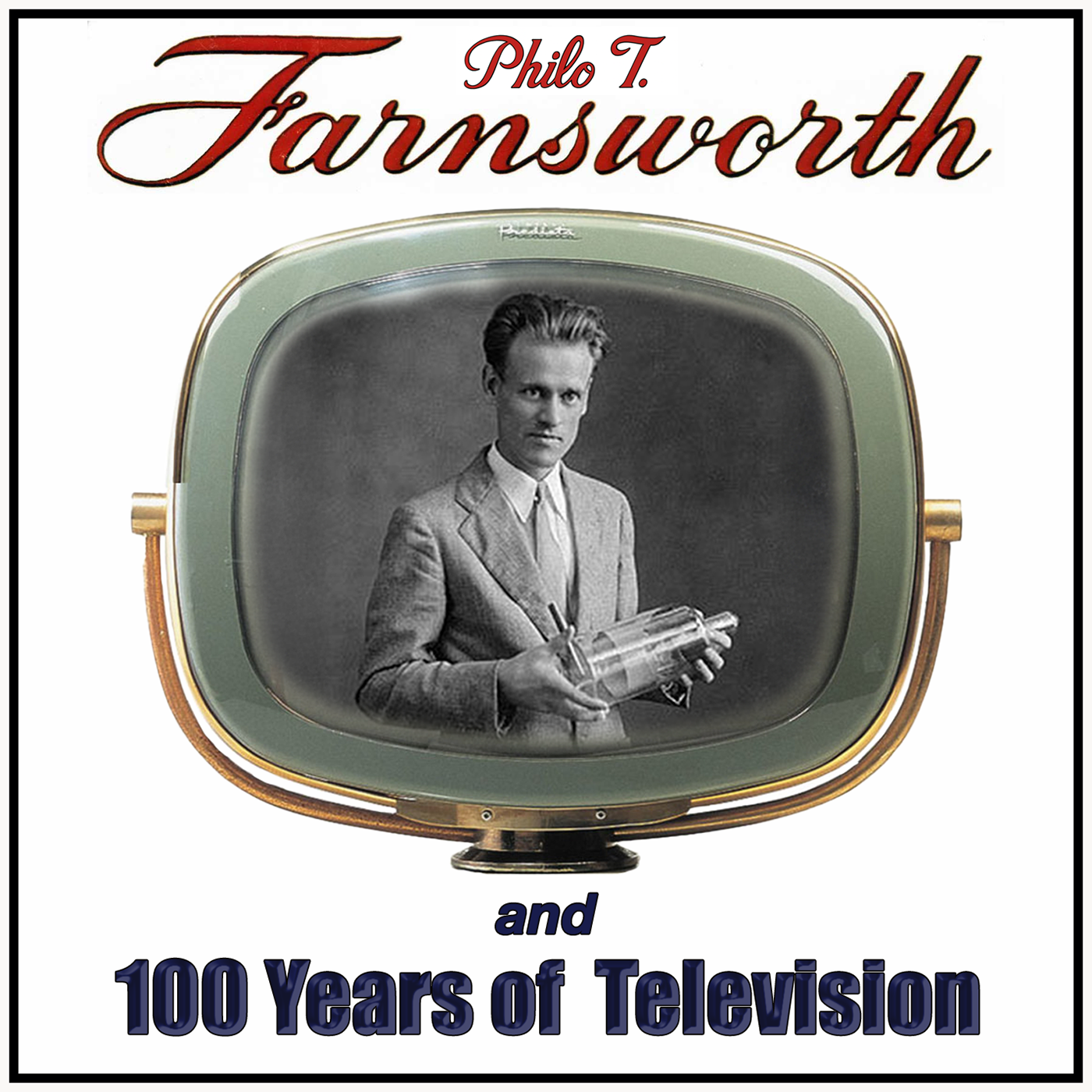
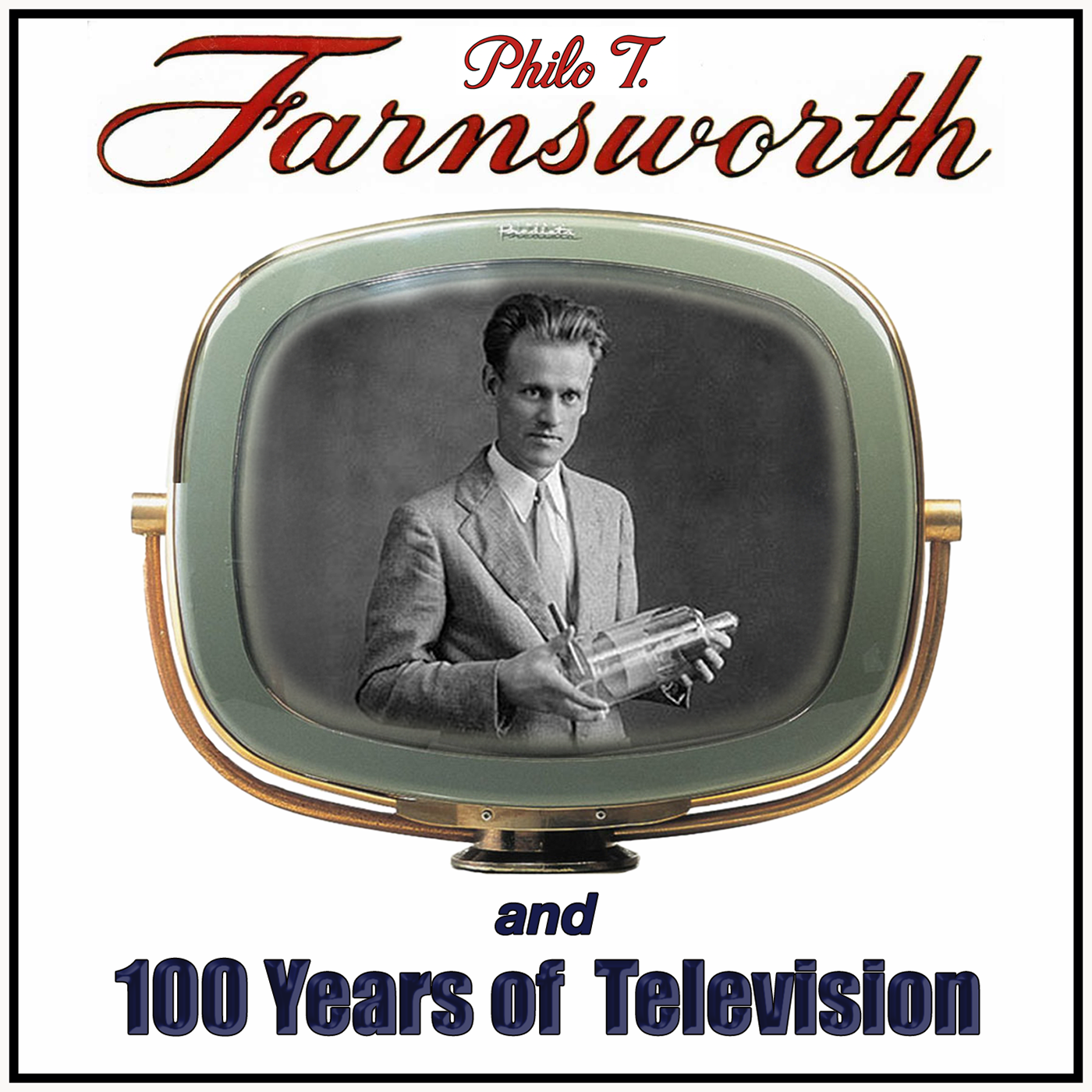
I'm Paul Schatzkin, author of the Boy who Invented Television, the definitive biography of Philo T. Farnsworth, who invented the world's first all electronic television television system.
In the last episode, we saw how the war in Vietnam had divided the nation as it played out on television.
Today is countdown number 44. The whole world is Watching.
Among the organizers of the October 1967 March on the Pentagon mentioned in the previous milestone were Jerry Rubin and his partner in calculated mayhem, Abbie Hoffman.
Both were emerging as key figures in the counterculture movement forming among draft age activists coming of age in the 1960s.
Some years later, reflecting on a decade of guerrilla theater and borderline insurrection, Abbey Hoffman recalled a principle entirely consistent with the new reality Marshall McLuhan anticipated for the generation that was raised on television.
In his 1980 memoir, soon to be a Major motion Picture, Hoffman, a modern revolutionary, heads for the television station, not the factory.
Of all the tumultuous events of the 1960s, perhaps none illustrated Hoffman's thesis more than TV's coverage of the carnage that erupted on the streets of Chicago during the Democratic Party's national convention in the summer of 1968.
By the time the convention opened on Monday, August 26, the Democratic Party was tearing itself apart over a war Walter Cronkite had already declared was a stalemate.
Minnesota Senator Eugene McCarthy's strong showing in the March New Hampshire primary drove Lyndon Johnson from the race.
Robert Kennedy, who entered the race days after McCarthy embarrassed Johnson in New Hampshire, was running a strong and popular campaign when he was assassinated in Los Angeles on June 5, just hours after winning the California primary.
That left Vice President Hubert Humphrey, who had skipped every primary, working the party machinery instead as the establishment's candidate heading into Chicago.
The activist elements that converged in Chicago came from two factions that had barely spoken to each other previously.
Abbie Hoffman and Jerry Rubin's Youth International Party, the Yippies, wanted street theater orchestrated for the cameras.
Dave Dellinger's more disciplined National Mobilization Committee to End the War, AKA the mobe, which included Tom Hayden and Rennie Davis of the Students for a Democratic Society, or SDS, brought in over 100 anti war groups. Through traditional political organizing.
The two factions could barely agree on lunch, but they were destined to converge on the same streets. In Chicago.
Longtime Chicago Mayor Richard Daley spent months arranging a convention that would showcase his city and anoint his chosen candidate the the party insider Hubert Humphrey.
Daly got the camera set up in restricted locations with fixed positions, effectively nailing it all down so that the broadcast would show off the mayor's version of Chicago. But none of his careful planning worked out as Daly intended.
The demonstrators also knew where the cameras were. They understood, perhaps better than anyone, that television had become the fulcrum of America's political levers. You didn't march past a TV camera, you marched toward it.
The convention was already coming unraveled. As the first gavel fell on Monday, August 26, inside the International Amphitheater, civil rights activists from Mississippi and Georgia challenged the credentials of those state's all white party delegations.
The arguments on the floor ran late into the night.
Meanwhile, thousands of protesters descended on Grant park downtown at 11pm Police used tear gas to clear them, beating both demonstrators and members of the press.
None of that action was covered by live tv. Mayor Daley's careful orchestration of the camera placement saw to that. But film footage eventually made it to the networks, showing viewers that things were getting messy in the streets of Chicago.
It didn't get any better the following night, August 27, outside, confrontations between protesters and police continued, with the National Guard thrown into the mix to protect the delegates staying at the Conrad Hilton Hotel on Michigan Avenue as protesters gathered there throughout the night inside the Amphitheater, Mayor Daley's security apparatus was everywhere on the floor and in the galleries, and some inside the venue felt like they were in the midst of a paramilitary occupation.
Viewers at home got a direct, immediate taste of the atmosphere on the floor when CBS correspondent Dan Rather tried to interview a Georgia delegate who was being removed from the proceedings.
Chaos and confusion seemed to envelop Rather, who told the security personnel, unless you're going to arrest me, don't push me.
Moments later, Rather reported that somebody belted me in the stomach during that.
And in the anchor booth above the convention floor, Walter Cronkite, the anchor of the CBS Evening News and the most trusted man in America, responded on the I think we've got a bunch of thugs there dan by the third day of the convention, April 28, the city of Chicago was near a state of siege. Between 10 and 15,000 yippies, students and idealists converged on Grant park as Hubert Humphrey's nomination ground forward. Inside the hall to meet this ragtag multitude, Mayor Daley put nearly the entire Chicago police force, more than 12,000 strong, on active duty, with support from another 15,000 state police and national guard.
That adds up to a combined force of more than two riot geared police and soldiers for every unarmed hippie demonstrator.
Meanwhile, inside the International Amphitheater, the credentials fights gave way to a debate over the Vietnam plank of the party's platform. The fault lying running beneath the entire proceedings.
An anti war faction of the party had introduced a call for an unconditional cessation of all bombing and mutual withdrawal of US and North Vietnamese forces from South Vietnam.
But the Johnson administration plan, with establishment candidate Hubert Humphrey as its new standard bearer, stipulated that the bombing should continue.
When the vote was taken on Wednesday afternoon, the peace proposal failed by a vote of 1,568 to 1042, a defeat for the plank, but by a margin that clearly illustrated the deep divisions within the party.
After the vote, anti war delegates from California and New York began singing we shall overcome and marching with other delegates around the convention hall.
Across the three networks, nearly 30 million people, 80% of the people watching television that night witnessed what looked like an anti war demonstration erupt on the floor of the usually stayed Democratic National Convention.
On the podium, party officials tried to restore order while the protesters circled the floor singing we shall Overcome and waving stop the war banners. The orchestra was instructed to start playing the patriotic anthem you're a grand old flag.
On NBC anchor David Brinkley called it a rather furious contest between the delegation and the convention orchestra.
What was happening on the convention floor was reflected even more viscerally on the streets.
The demonstrators gathered again outside the Conrad Hilton Hotel, but this time they ran headlong into Daley's massive police force.
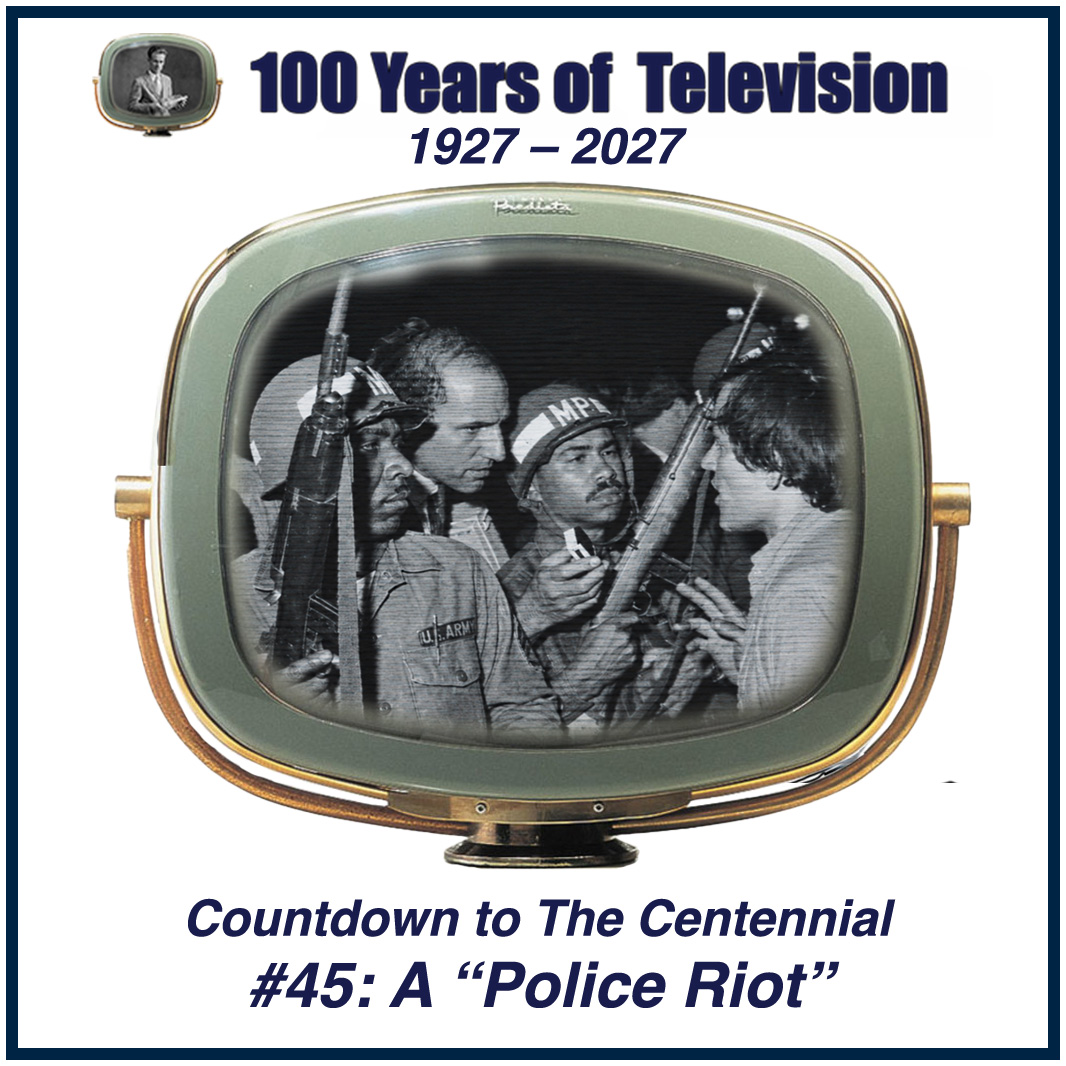
From every direction, police descended in what was later described as a police riot.
Amid clouds of tear gas, the police swarmed over the crowds, swinging nightsticks indiscriminately at demonstrators report and even medics trying to render aid to the increasing numbers of bloodied victims.
Many of the injured were dragged into paddy wagons with one more blow from the clubs, and through it all, the news cameras rolled.
Footage of the demonstrators and the police instigated violence was captured on film. But producers, recognizing the urgency of the moment, expedited the processing and rushed the footage onto the air.
Millions of viewers at home witnessed the musical circus on the convention floor intercut with the chaos in the nearby streets.
And on those streets battered and bloodied, thousands of demonstrators chanted in unison, a fact, a dare, a threat, and a prayer that echoed in Chicago and around the country.
The whole world is watching.
The whole world is watching. The whole world is watching.
The presence of the TV cameras changed the moral calculus of the police reaction.
Police may have had the clubs, but witnesses in the tens of millions to the spectacle of the state beating its own citizens gave the demonstrators the power.
While the tear gas still hung in the hot summer night, Hubert Humphrey was nominated on the first ballot.
The convention staggered to its close on Thursday, August 29th.
After being handed the nomination without having secured a single vote in any of the primaries, Hubert Humphrey delivered an acceptance speech that ignored the turmoil engulfing the party. He praised Lyndon Johnson, pledged continuity, and offered only the vaguest of gestures toward peace.
Meanwhile, the streets outside the amphitheater were being hosed down to wash away the aftermath of the preceding night's carnage.
The split screen imagery of those four nights in Chicago followed Humphrey into the general election like a wound that would not close.
Sensing the nation's mood after what had transpired in its living rooms, Republican nominee Richard Nixon seized on a law and order theme and professed to have some kind of secret plan to end the war.
Humphrey finally broke with Johnson on Vietnam in late September. But November arrived too soon.
In a final vote that clearly reflected the deep division across the land, Richard Nixon won the popular vote by less than 1 percentage point. He took office the following January.
And as the whole world continued watching, the war ground on for seven more years, not ending until the names of some 58,000 dead Americans were carved into a black granite monument on the national Mall, this brings us to the end of number 44 in the countdown of the top 100 milestones in the first 100 years of television.
Stay tuned for the next episode when color television adds a new dimension with Julia, the first situation comedy to star a black female actress.
Thanks for listening to 100 Years of Television, a two year countdown to the centennial of television on September 7, 2027.
For more, aim your gizmo to 100yearstv.com this podcast was written, recorded, edited, engineered and uploaded by me, Paul Schatzkin, and is a production of Farnovision.
If television was invented by somebody named Farnsworth, then why don't we call it Farnovision?
[00:13:47] Speaker A: They all said we never would be happy. They laughed at us and how but how we got the last life now.