Episode Transcript
[00:00:00] Speaker A: They all laughed at Christopher Columbus when he said the world was round.
They all laughed when Edison recorded sound.
They all laughed at Wilbur and his brother when they said that man could fly.
They told Marconi wireless was a phony. It's the same old
[00:00:20] Speaker B: welcome back to 100 Years of Television, where for 100 weeks that started in October 2025, we're going to recall the top 100 milestones in the first 100 years of television and video.
The countdown will culminate on September 7, 2027. That's the 100th anniversary of the day television was invented.
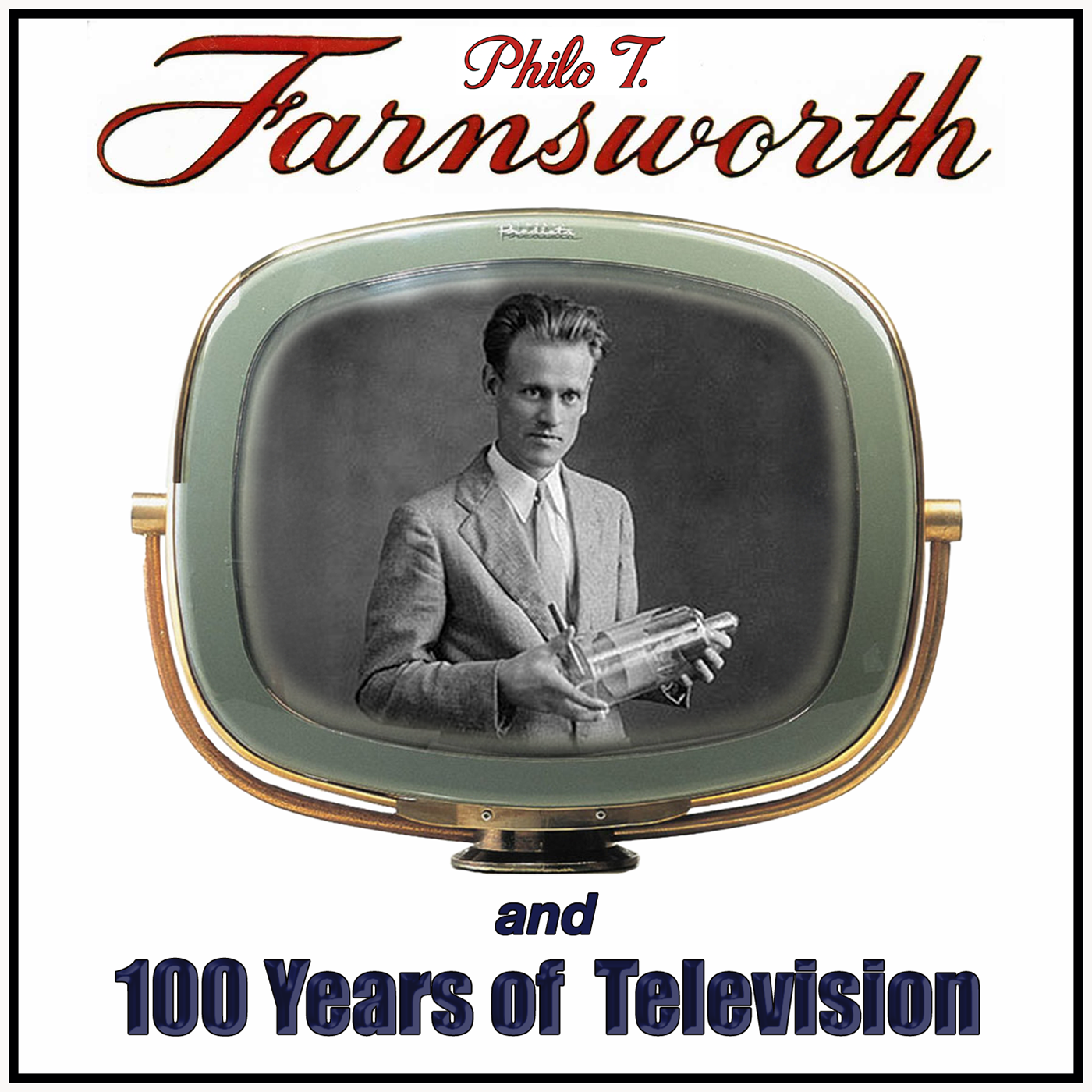
I'm Paul Schatzkin, author of the Boy who Invented Television, the definitive biography of Philo T. Farnsworth, who invented the world's first all electronic television system.
In the last episode, we went where no man had gone before, to the frontiers of space with Star Trek today Countdown 42 returns from that last frontier to face regulation by raised eyebrow.
At the end of the 196566 season, CBS dominated the Nielsen TV ratings.
More than half of the top 30 programs aired on CBS.
But while NBC finished second in the overall ratings, Bonanza, the shining jewel of the network's Living Color campaign, was the number one rated show in the country with a 31.8 rating.
Programs on CBS fell in right behind bonanza. Gomer Pyle USMC was number two at 27.8, the Lucy show was number three at 27.7, and Red Skelton scored 27.6.
But three of the top four shows were not enough for network founder and chairman William S. Paley.
He wanted the top spot.
William Paley started in radio in the 1920s, advertising his family's cigar business on stations in the Philadelphia area.
When cigar sales doubled, it quickly dawned on him that the future was not in selling cigars, but in selling advertising.
In 1928, he bought Control of a struggling network and renamed it the Columbia Broadcasting System.
CBS over the decades that followed, Paley sat atop an ethereal empire that was often called the Tiffany Network.
But despite the network's dominance and prestige in the mid-1960s, the biggest prize, number one in the annual Nielsen ratings, remained beyond the Emperor's reach.
To take on the Cartwright Brothers of the Ponderosa, CBS turned to an unlikely pair of brothers the the comic folk singers known as the Smothers Brothers.
Amid the folk revival of the late 1950s, the Smothers Brothers had formed a duo in the manner of the Weavers in the Kingston Trio, playing local venues and college campuses in Northern California.
But it was their onstage rapport that started getting attention from audiences and talent scouts, with Tom assuming the role of the aggrieved older brother to Dick's smug, competent straight man.
It was a sibling rivalry wrapped in a comic blanket of sibling harmonies.
The Smothers Brothers first national exposure came on January 28, 1961, with an appearance on NBC's Tonight show, hosted at the time by Jack Parr.
As TV historian David B. Cooley writes in Dangerously Funny the Uncensored Story of the Smothers Brothers Comedy hour, published in 2009, the routine they called the Fox began with a silly introduction from Tom and then shifts to a song sung by Dick, which is interrupted by Tom, who ruins a folk song about Fox hunting ducks and geese with loud quacking, infantile bickering and Dick's straight faced singing. And they killed.
After the performance, Jack Parr invited them to the desk and anointed the Smothers Brothers as rising stars. I don't know what you guys have, jack Parr said, but no one's gonna steal it.
The Smothers Brothers appeared on the Tonight show with Jack Paar more than a dozen times and became regulars on the show after Johnny Carson took over in 1962.
In the fall of 1965, ABC tried to capitalize on the brothers growing popularity with a situation comedy. The Smothers Brothers show cast Tom as an angel returned to earth to guide Dick through his life.
The sitcom format used none of the brothers actual strengths, which left Tom with an unwavering conviction if ever they ventured again into television, he would insist on creative control.
Meanwhile, CBS was still floundering to find a formula that could take down Fortress Ponderosa over on NBC.
After NBC moved Bonanza to 9pm on Sunday nights in 1961, that time slot became known as the Kamikaze Hour because everything the other networks put on at that time went down like a Japanese zero.
The casualties on CBS included Ronald Reagan's General Electric Theater, the Judy Garland Show, Raymond Burr's Perry Mason, My Living Doll starring Bob Cummings and Julie Newmar, the Joey Bishop show and a retooled in color version of the Garry Moore show, which had been a staple on the network between 1958 and 1964.
After several years of trying the same things and not getting any different results, a prominent Hollywood talent agent finally shifted the network's thinking.
Abe Last Vogel for many years the head of the William Morris Agency, went to William Paley with a timely observation.
Every major star in CBS's variety lineup, from Ed Sullivan and Red Skelton to Jackie Gleason and Lawrence Welk was in his 50s or 60s, and the network's viewership was aging right along with them.
Last, Fogle offered a solution from his own agency's stable of rising young stars.
The Smothers Brothers, he proposed, were a polished act that could appeal to a younger audience.
Paley, who who at 65 was defying his own company's mandatory retirement policy, was willing to try anything at this point, and the brothers were offered a variety show.
The new show was originally scheduled for the fall of 1967, but when Gary Moore crashed and burned, CBS programming chief Mike Dan asked the brothers if they could start six months early in the dreaded Sunday slot opposite Bonanza.
Tom Smothers didn't hesitate. Hey, if we succeed, tom said, it will be a big deal. And if we fail, no one will blame us. So let's go.
The Smothers Brothers Comedy hour premiered on February 5, 1967.
The featured guest for the first episode was Jim Nabors, whose Gomer Pyle USMC made him the most popular star on CBS.
The second show, on February 12, featured comedy veterans Jack Benny and George Burns donning red blazers to impersonate their hosts and joking about the generation gap.
Working for these kids, burns cracked, is like General Eisenhower working for Gomer Pyle.
Those first two shows were enough to suggest that CBS had a winner on its hands.
According to the New York Times, On February 14th, the comedians outdrew the Cowboys and got a 36 share of the available audience to Bonanzas. 26.
The same article quoted an unnamed source at CBS, possibly by Dan himself, proclaiming, my gosh, we may be stuck with a hit.
As more ratings trickled in, they showed that the Smothers Brothers Comedy Hour was doing exactly what what Abe Lastvogel had pitched to William Paley.
The Smothers Brothers were not just drawing viewers previously tuned into other networks, they appealed to a whole new audience.
In its third week of tracking the insurgent new entry, Nielsen reported that the Smothers Brothers Comedy Hour had knocked Bonanza down to 15 in the weekly ratings, temporarily vaulting Gomer Pyle USMC, airing Fridays on CBS, into the number one spot.
The Smothers Brothers themselves finished their first short season at number 16, a notable finish for a show that had been rushed into production just six months earlier.
The ratings were so good that before the ninth episode was taped at the end of March 1967, Mike Dan renewed the Smothers Brothers Comedy Hour for the full 1967-68 season.
The Trojan horse that nobody saw outside the gates of the Tiffany network was the ghost of the Smothers Brothers failed ABC sitcom.
This time they insisted on creative control and CBS included it in their contract.
Mike Dan, who saw the Smothers Brothers as just a pair of youthful clean cut folk singers with a clever comedy routine, had no way of knowing what these young provocateurs had up their sleeve.
The trouble brewed slowly at first with minor squabbles with network standards and practices, AKA the censors.
Each skirmish carried its own immediate impact on the writing and casting, but exposed a deepening undercurrent of tension.
For the first episode of the show's second season, Tom and Dick extended an invitation to revered folk singer Pete Seeger to appear on network television for the first time since he had been blacklisted during the McCarthy era of the 1950s.
Network censors turned apoplectic when they saw the lyric content of the song that Seger planned to perform.
Waist Deep in the Big Muddy was about a gung ho army officer pushing his men into a deepening river, a thinly veiled analogy to the deepening quagmire in Vietnam.
Tom and Dick supported Seeger when the censors insisted he cut the most objectionable lyrics.
Despite the censors demands, the entire song was performed and recorded on September 1, along with an audience sing along of Weem Away and and a poignant rendition of where have all the Flowers Gone.
But when the show aired on September 10, waist deep in the Big Muddy was cut out completely in a ham fisted bit of editing. Seger is first seen playing his 12 string guitar. But after a quick shot of the audience applauding, the next frame shows him playing his banjo.
There is a palpable irony in the Seeger episode that highlights the the delicate relationship between broadcast television and the government.
Just a month before his scheduled Smothers Brothers appearance, Seeger's new album, from which Waist Deep was the title track, was released on Columbia Records, a wholly owned subsidiary of CBS Inc.
CBS could sell the song on vinyl, but but chose not to send it out for broadcast over federally licensed airwaves.
Despite the drama behind the scenes. By the end of its second season the Smothers Brothers Comedy Hour had accomplished what CBS had hoped Tom and Dick could do.
The Comedy Hour finished the season at 18, but that drew enough viewers away from NBC to knock Bonanza down to a three way tie for number four.
Number three was Gomer Pyle on CBS.
Number two was the Lucy show on CBS and the number one show on primetime television for the entire 1967-68 season was Drum Roll, Please the Andy Griffith show on cbs.
William Paley finally had the last jewel in his crown.
The first episode of the third season of the Smothers Brothers Comedy Hour geared up for production in September 1968, less than a month after police beat protesters during the Democratic National Convention in Chicago.
Harry Belafonte was slated as the season premiere's featured performer, but when he sang the calypso number Don't Stop the Carnival over a montage of television footage from Chicago, the censors just cut the whole thing.
Instead of Harry Belafonte, viewers got to watch a five minute campaign ad for Republican presidential nominee Richard Nixon.
In one of the most contentious episodes of that third season, in March 1969, folk singer and activist Joan Baez dedicated a song to her husband, David Harris, who was about to go to prison for draft resistance.
CBS pulled the entire episode, finally airing it on March 30, 1969. After cutting Baez's explanation for why her husband was being sent to prison.
The flame that would eventually burn the whole thing down first showed up in jokes about a burning bush.
David Steinberg was a former rabbinical student who built a stand up comedy act out of satirical sermonettes, Old Testament stories retold with a needling contemporary edge.
In his first appearance on the Comedy Hour in October 1968, Steinberg reimagined Moses at the burning bush.
After the sermonette aired, CBS's switchboards lit up with what Standards and Practices logged as more complaints than any single piece of material in the network's history.
Of course, Tom and Dick loved that and wanted to bring Steinberg back, but the network's directive was explicit. Steinberg could return, but no more sermons.
But the brothers brought him back and were perfectly happy to let him do another sermon for the show that was scheduled to air on April 13, 1969.
That entire episode of the Smothers Brothers Comedy Hour has never aired.
By early 1969, the Smothers Brothers were not just a problem that Standards and Practices had to manage.
Their content was becoming an issue for the entirety of cbs, Inc. And its regulatory obligations.
Mike Dan, the head of programming who had first ushered the Comedy Hour onto the schedule, remained Tom and Dick's most stalwart champion and had already renewed the show for a fourth season before things started boiling over.
By then, the man who mattered most in the chain of command was Robert Wood, the recently appointed president of the CBS Television Network.
Wood's purview included all of the network's roughly 200 affiliates and their individually owned FCC licenses.
In that context, the Smothers Brothers had become a nuisance in the regulatory environment that was shifting under the Nixon administration that was inaugurated in January 1969.
That meant that regardless of the ratings, Robert Wood wanted the Smothers Brothers gone, even if he had to manufacture a crisis to cross their show off the schedule.
The episode with David Steinberg's Second Sermonette played perfectly into Wood's designs.
As the content issues intensified through the Comedy Hour's third season, the network wanted tapes of each episode far enough in advance that affiliates could screen them before broadcast.
Those terms were never formally baked into the contract, but the network was insisting that tapes for each episode be delivered by the Wednesday of the week prior to the scheduled air date. The episode with David Steinberg's sermonette was scheduled to air on Sunday, April 13, 1969.
That meant that CBS expected delivery by Wednesday, April 2.
Records show that broadcast ready tapes were delivered on Friday, April 4 and Saturday, April 5.
That single day's delay before any tapes had arrived was all Robert Wood needed.
On Thursday, April 3, Robert Wood drafted a telegram, which Tom Smothers received on Friday, April 4, after citing the failure of timely delivery. The telegram ended with therefore we hereby notify you that the agreement between you and us is terminated.
The Smothers Brothers always insisted that their comedy hour was not canceled, a term typically used to describe a show that had reached the end of its life expectancy, usually by dint of unsatisfactory ratings. We weren't canceled, tom or Dick would say at different times. We were fired.
The distinction is important because if this was not the first, it was certainly the most visible instance of a program being taken off the air and because of a network's objections to its content, even when the network had promised the creators creative control.
The Smothers Brothers weren't fired because the show was failing. They were fired because the show was working as political provocation and because other forces were at work beyond the studios in Los Angeles and the offices in New York, former FCC economist Thomas Hazlitt wrote in his 2017 book the Political Spectrum.
Licensees for radio or television tend to comply not only with the explicit rules of the license, but also with policymakers implicit demands. Regulation by Raised Eyebrow Hazlett cited those raised eyebrows in 2017, nearly five decades after CBS fired the Smothers Brothers. But the expression was hardly new.
Wary observers within the broadcast industry had been using that expression since the 1940s as a tacit recognition of how the licensing system really worked.
And within months of the cancellation, Richard Nixon's new FCC chairman, Dean Burch, was raising eyebrows of his own.
After Richard Nixon delivered his silent majority address on November 3, 1969, Chairman Birch, who had taken his post just three days prior, called the broadcast network's and demanded transcripts of the previous night's commentaries on Nixon's speech.
Nine days later, Vice President Spiro Agnew delivered an address of his own and attack the instant analysis and garrulous criticism by a small band of network commentators and self appointed analysts.
Raised Eyebrow Meet the Nixon Administration the FCC does not license networks. It licenses individual stations, some of which are owned by the network and hundreds more that are affiliated with each network that air their programs.
A raised eyebrow was all it took to cast uncertainty on the likelihood of a license renewal.
The same deniability that insulated Washington ran nearly to the top of the chain of command at cbs.
As president of cbs, Frank Stanton sat just one rank below CBS chairman William Paley in the corporate hierarchy.
The network and the group made the decision, stanton said in a rare comment on the matter. I suppose I could have vetoed it if I wanted to, but I did not participate in that decision.
Less than two weeks after the Smothers Brothers were fired, TV Guide published an editorial applauding the decision.
Using the example of Joan Baez's censored dedication from the episode that had finally aired at the end of March, the editorial asks its 12 million plus readers, shall a network be required to provide time for a Joan Baez to pay tribute to her draft evading husband while hundreds of thousands of viewers in the households of men fighting and dying in Vietnam look on in shocked resentment.
I think we found out really, the big boys don't play fair, dick's mother said of the TV Guide commentary.
We thought they would.
Tom and Dick always maintained that they hadn't broken any contractual agreement since the delivery deadline Robert Wood had used as pretense for their dismissal had never been part of their contract in the first place.
The Smothers brothers sued CBS for breach of contract in 1973, and a federal court ruled in their favor and ordered CBS to pay $776,300 in damages.
By then, their popular, successful and groundbreaking television show and the moment it belonged to had vanished into the ether.
This brings us to the end of number 42 in the countdown of the top 100 milestones in the first 100 years of television.
Stay tuned for the next episode when television takes the inhabitants of planet Earth to the surface of the moon.
Thanks for listening to 100 Years of Television, a two year countdown to the centennial of television on September 7, 2027.
For more, aim your gizmo to 100yearstv.com this podcast was written, recorded, edited, engineered and uploaded by me, Paul Schatzkin and is a production of Farnovision.com if television was invented by somebody named Farnsworth, why don't we call it Farnovision?
[00:24:50] Speaker A: They all said we never would be happy. They laughed at us and hard.
But ho ho ho, who got the last right now?