Episode Transcript
[00:00:00] Speaker A: They all laughed at Christopher Columbus when he said the world was round they all laughed when Edison recorded sound.
[00:00:10] Speaker B: They.
[00:00:11] Speaker A: All laughed at Wilbur and his brother when they said that man could fly they told Marconi wireless was a phony it's the same old Tribe welcome to.
[00:00:21] Speaker B: 100 Years of Television. This is episode number 12, Countdown 95 Mystic Magic Rays for 100 weeks that started in October 2025, this podcast is going to recall the top 100 milestones in the first 100 years of television and video.
The countdown is pegged to culminate on September 7, 2027, the 100th anniversary of the day television as we know it was invented.
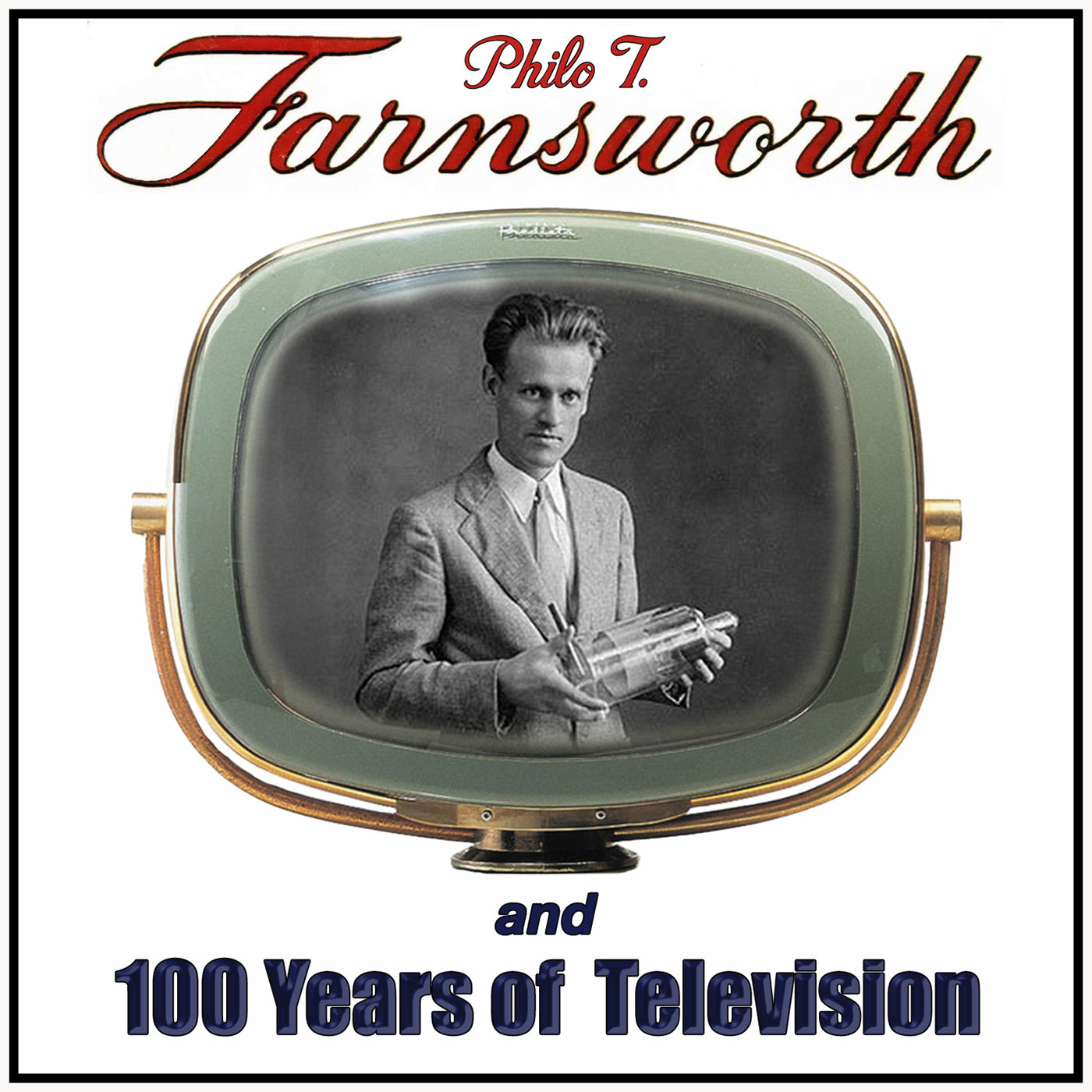
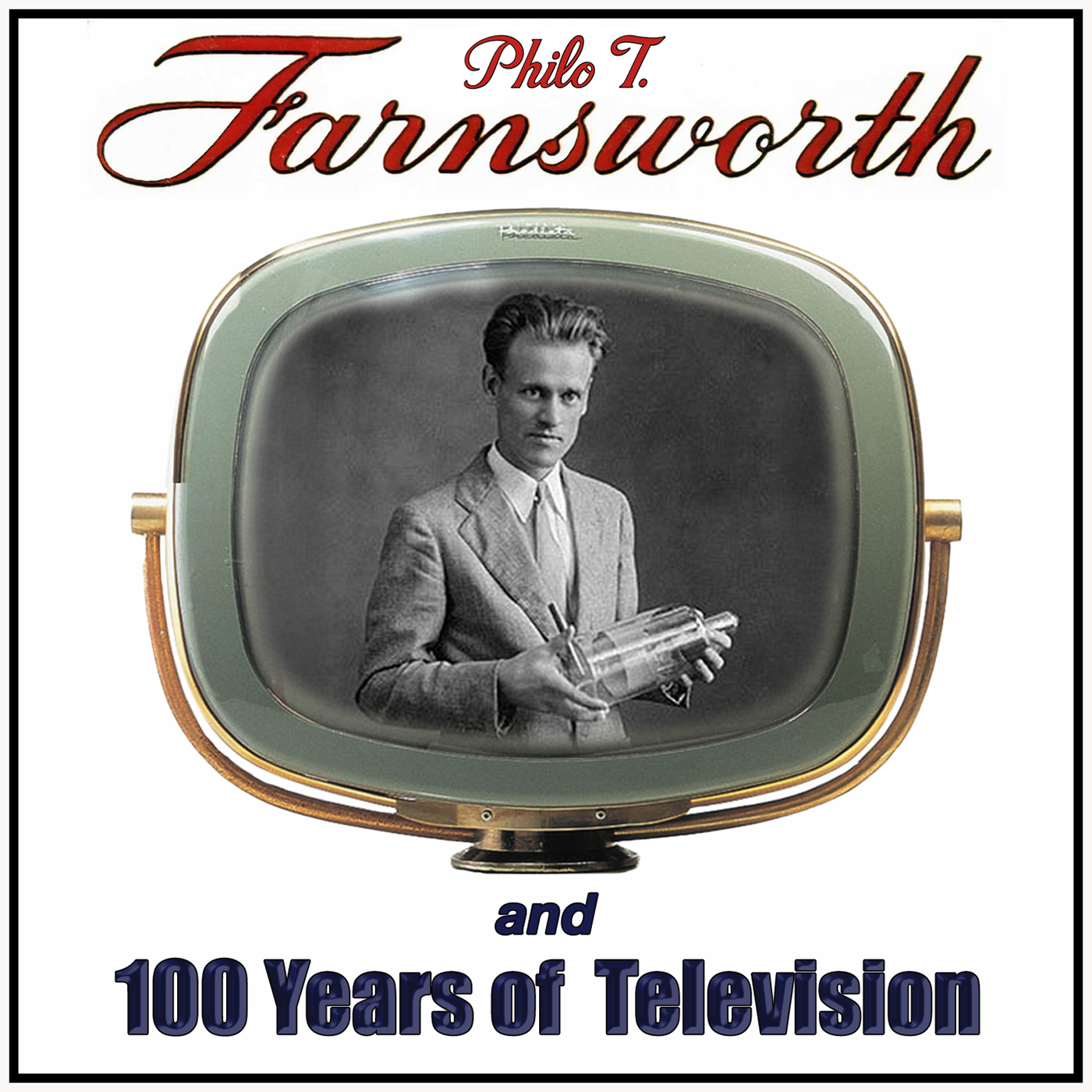
I'm Paul Schatzkin, author of the Boy who Invented Television, the definitive biography of Philo T. Farnsworth, who invented the world's first all electronic television system.
In the last episode, we visited Germany with Philo T. Farnsworth to see how television was used as a Nazi propaganda tool at the Berlin Olympics in 1936.
Today we're going back across the Channel to England to witness the world's first regularly scheduled television programming.
Despite the tremendous engineering strides made in the decade after its invention, by 1936 the commercial adoption of television in the United States remained mired in litigation between Farnsworth, who had invented it, and and RCA's David Sarnoff, who wanted to control it.
There were no such impediments in the United Kingdom, where John Logie Baird started using the BBC radio airwaves for experimental television transmissions in 1929.
At the start, Baird's mechanical televisor was capable of only 30 lines per frame, producing blurry, flickering silhouettes not much larger than a postage stamp.
By the 1930s, Baird's system was capable of 240 lines at 25 frames per second. But even that Herculean achievement with his mechanical system paled in comparison to the fully electronic systems on both sides of the Atlantic that were already producing more than 400 lines at 30 frames per second.
Sticking with this antiquated approach cost baer dearly.
In 1933, his floundering enterprise was rescued by British Gaumont, the UK branch of the French Gaumont Film Company, founded by Leon Gaumont in Paris in the 1890s.
Gaumont's primary interests were in film production and exhibition, but they were also wary of the impact that television could have on their business.
This concern prompted their alliance with Baird, who, if nothing else, had become a recognized name in the industry.
The good news for Baird was that for the first time he had sufficient capital to continue developing his mechanical television system.
The bad news for Baird was that his new benefactors could see what an anachronism they'd invested in. And after reducing Baird to a nominal role in his own company, they went looking for something closer to the state of the art.
And here, not surprisingly, is where the race for television in Britain begins to unfold along the same lines as the race in the United States.
By 1934, RCA had finally developed a video camera tube that served David Sarnoff's quest to work his way around Farnsworth's patents, Vladimir Zworkin's awkward but still useful Iconoscope.
About the same time Britain's electrical and musical industries EMI began experimenting with an identical tube it called the Emitron.
The common lineage of the Iconoscope and the Emitron is too complex to go into here, but suffice it to say they were the exact same tube.
With television on its corporate horizon, EMI formed an alliance in 1934 with British Marconi, the venerable pioneer in wireless communication.
Under the umbrella of a new subsidiary called Marconi EMI Television Co. Ltd.
EMI contributed its research facilities, where Isaac Schoenberg led its television laboratory.
Marconi contributed its radio transmission and broadcasting expertise and and most importantly, its close personal and corporate connections to the BBC.
In addition to those close ties with the BBC, EMI was closely affiliated with. Wait for it. Who else but the Radio Corporation of America?
RCA and EMI were very similar companies with very similar pedigrees on operating on opposite sides of the Atlantic. Their oddly incestuous relationship went a step further in 1934 when the two corporate behemoths negotiated a patent cross license.
That arrangement gave RCA access to EMI's cutting edge audio engineering technology in exchange for EMI gaining access to RCA's electronic video technology, including the recently introduced Iconoscope.
It was not long before the Iconoscope's twin, the Emitron, started showing up in experimental British television studios.
The arrangement created dire consequences for John Logie Baird.
All of its alliances and resources gave Marconi EMI television access to the state of the art in both content production and broadcasting.
Baird, on the other hand, was still strapped to his spinning wheels and mirrors.
There was only one place British Gaumont could turn to keep the Baird name competitive to America and Philo T. Farnsworth, who was invited to sail across the Atlantic to showcase his system in 1934.
Two weeks later, Farnsworth & Co. Sailed back to America with his first bona fide patent license and and a check for $50,000, cash.
It was not hard to see the limitations of Baird's mechanical system, but the BBC had to be judicious in its proceedings.
In 1934, the British Post Office, which regulated broadcasting in Britain like the FCC regulates broadcasting in America, created the Television Advisory Committee, chaired by Lord Selsden to evaluate the competing systems and Recommend how the BBC should proce.
But between Marconi, EMI's access to RCA's technology and their long standing relationship with the BBC, Baird really never stood a chance.
The BBC built two studios at the Alexandra palace on a hilltop on the outskirts of London. Studio A for Baird and Studio B for emi.
From an antenna atop the alley Pally, the dueling signals broadcast over a radius of 30 miles, effectively covering all of Greater London.
Though still technically just the start of the competitive trial, EMI treated its inaugural electronic broadcast from studio B on November 2, 1936 with enough pomp and fanfare to infer that it was truly the official start of television service in Britain. And most historians recognized that broadcast as the world's first regularly scheduled television broadcast service.
In a documentary film of the event, produced by focusing a 35 millimeter camera at a cathode ray tube display, you can hear the voice of BBC Radio veteran Leslie Michael.
The vision and sound are on.
The station goes on the air.
On roughly 500 television sets scattered around London, in dealer showrooms, laboratories and the homes of BBC executives and staff, probably fewer than 1,000 actual viewers saw a White Tide orchestra conductor wave his baton, followed by the satin gowned figure of renowned English actress and singer Adele Dixon, stepping before the camera to sing a song composed specially for the event.
[00:09:22] Speaker A: Almighty maze of mystic magic rays is all about.
[00:09:34] Speaker B: In case that audio wasn't clear, she's singing. A mighty maze of mystic magic rays is all about us in the blue.
Baird also transmitted something that day, but he was still relying on a 240 line mechanical scanner and could only transmit film rather than a live studio scene like the EMI broadcast.
Despite his license with Farnsworth, Baird was unable to make effective use of the image dissector, even after Farnsworth himself returned to London in the summer of 1936 to try to get Baird back in the game.
Within three months, the results of the trials were so lopsided that the BBC stopped using Baird's equipment entirely, formally ending the competitive trial in February 1937.
The BBC's adoption of EMI's electronic television effectively marks the end of the mechanical era of television that began with Paul Nipkoff in the 1880s.
In 1937, the BBC settled on the EMI 405 line system, making it the world's first electronic TV standard to be adopted for regular broadcasting.
Over the next two years, programming ran at least two hours every day, with adaptations of theater, light musical reviews, cooking demonstrations, newsreels, commentary and interviews. In 1938, the BBC produced its first original television drama, the Maker of Dreams.
And then, like everything else about television, the service was suspended with the outbreak of World War II in September 1939.
This brings us to the end of number 95 in the countdown of the top 100 milestones in the first 100 years of television.
Stay tuned for the next episode where television broadcasting is prematurely launched in the United States with a publicity stunt staged by David Sarnoff at the New York World's Fair in the spring of 1939.
Thanks for listening to 100 Years of Television, a two year countdown to the centennial of television on September 7, 2027.
For more, aim your gizmo to 100yearstv.com this podcast was written, recorded, edited, engineered and uploaded by me, Paul Schatzkin and is a production of Farnovision.com if television was invented by somebody named Farnsworth, why don't we call it Farnovision?
[00:12:22] Speaker A: They all said we never would be happy they laughed at us and how but ho ho ho, who got the laughs right now.