Episode Transcript
[00:00:00] Speaker A: They all laughed at Christopher Columbus when he said the world was round.
They all laughed when Edison recorded sound.
They all laughed at Wilbur and his brother when they said that man could fly.
They told Marconi wireless was a phony.
[00:00:18] Speaker B: It's the same old welcome back to 100 Years of Television, where for 100 weeks that started in October 2025, we're going to recall the top 100 milestones in the first 100 years of television and video.
The countdown will culminate on September 7, 2027, the 100th anniversary of the day television was invented.
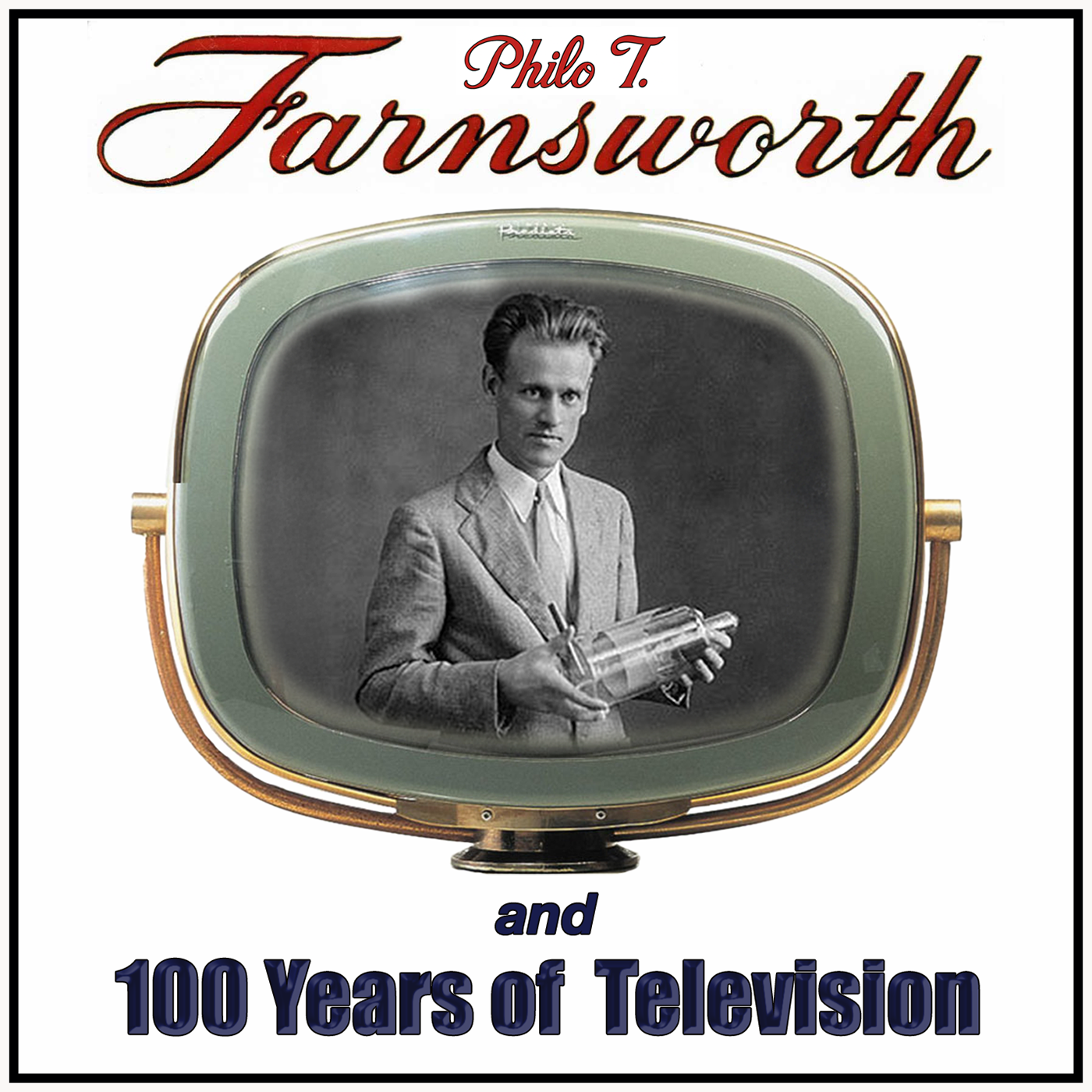
I'm Paul Schatzkin, author of the Boy who Invented Television, the definitive biography of Philo T. Farnsworth, who invented the world's first all electronic television.
In the last episode, Marshall McLuhan explained that when it comes to television, the medium really is the message. And today is countdown number 48, the Super Bowl.
In the beginning, there was only baseball on television. That is, professional sports on American television started in the summer of 1939 when RCA and NBC broadcast a double header from Brooklyn's Ebbets Field between the Dodgers and the Cincinnati Reds.
At the time, football was a relatively minor contender for the nation's attention.
College football was still a mostly regional attraction consigned to Saturday afternoons at the professional level. The National Football League struggled to gain traction after its founding in 1920 and lived for several decades in the shadow of baseball, which was universally revered as the national pastime.
Professional football made its television debut from the same Ebbets Field as baseball, with a football team that at the time bore the same name as the Burroughs baseball team.
On October 22, 1939, an NFL team called the Brooklyn Dodgers defeated the Philadelphia Eagles 2314 in a game broadcast again on RCA's NBC TV network.
Given that television was still very much in its experimental phase, the audience amounted to less than 1,000 viewers.
The game started in the afternoon on a cloudy day with no stadium lights, and before the final whistle the picture became so dim that the telecast was eventually abandoned for radio. Only in the years after World War II, football was still a cultural backwater to baseball.
Televised pro football remained sporadic and local individual teams cut deals with local stations. But there was no national strategy and no national audience.
It was obvious in the 1950s that pro football would have to find some kind of accommodation with television, but classic tensions arose between live sports and broadcasting.
The Los Angeles Rams ran headlong into television's double edged sword.
When the Rams televised all their games locally in 1950, actual attendance cratered the message was one of caution more than opportunity, and NFL commissioner Burt Bell elected to black out home markets even when the local team was on the road to protect gate receipts.
The calculus started to shift in 1951, when the struggling Dumont network signed a deal with the NFL. And that gave the league its first real taste of national exposure.
Dumont may have been the smallest of the networks, but by that time there were some 12 million television sets in America.
When Dumont broadcast the 1951 NFL championship game between the Los Angeles Rams and the Cleveland Browns, coast to coast, enough of an audience showed up that the league began to reconsider its stiff armed relationship with its new partner.
When Dumont went off the air in 1956, CBS picked up the contract for regular season games, and NBC paid the league $100,000 to broadcast just the championship games.
A breakthrough came when NBC broadcast the 1958 NFL Championship Game between the Baltimore Colts and the New York Giants. In what has often been called the greatest game ever played, the Colts finally defeated the Giants 23:17 in a sudden death overtime, delivering a level of suspense that baseball rarely offered.
Viewers were captivated, and when the final whistle blew, it was clear that something had shifted.
Football hadn't just found a television audience, it had taken the first steps toward dominance. And television itself was quietly rewriting the script.
In a ballpark, baseball is an experience of open space.
The vast green geometry on the field reflects the pastoral rhythms of a bygone era.
But on television, that space becomes emptiness, and the Elysian rhythms of the game are fragmented by the cuts between cameras.
Nine innings of a pitcher shaking off signs while there's no action on the bass paths can feel interminable on a screen smaller than a medicine chest mirror.
On the other hand, football, a sport far more reflective of the industrial world of the 20th century, seems almost designed for television.
The rectangular gridiron fits the screen more naturally than baseball's sprawling diamond.
Every play begins from a line of scrimmage. The camera follows the action as it erupts in one direction, compressed into violent bursts of bodies in motion.
And the stop and start structure of the game gives broadcasters ample opportunity to insert commentary, analysis, and, of course, commercials.
As television technology improved, better cameras, instant replay, multiple angles, football became increasingly suited to the medium.
The stakes cranked up a notch in 1960 when the American Football League was launched with lucrative television deals that quickly made the new league a formidable rival to the NFL.
The American Broadcasting Company ABC, was instrumental in the new league's ascent.
The still struggling third network went out on a limb to pay the fledgling new league $2 million per year for the rights to televise the entire NFL schedule.
The alliance of the two upstarts worked.
The AFL embraced television from the first kickoff, offering a more screen friendly style of play with more passing colorful unifor and innovative marketing that helped distinguish both the league and the network, with the network deploying innovative techniques on the field and in the control room. The arrangement between the AFL and ABC was successful enough that when the contract expired at the end of the 1964 season, the league was strong enough to negotiate a new contract with NBC that paid the league $36 million.
The new deal with NBC put the AFL on a near equal footing with the much older NFL, which was carried by CBS and locked both the leagues and the networks into a fierce rivalry.
Fate and financial common sense intervened In April of 1966 when Tex Schramm, owner of the NFL's Dallas Cowboys, and Lamar Hunt, owner of the AFL's Kansas City Chiefs, ran into each other in the Dallas airport.
Retiring to Schramms limousine, the two moguls began negotiating a deal that would tie the leagues together and lay the groundwork for the biggest annual event in television.
On January 8, 1966, the merger that united both leagues was announced. The two leagues would continue to operate independently before fully uniting under a single NFL umbrella in 1970, the merger also announced one provision that in time would overshadow everything else.
At the end of the 1966 season, the champions of the two leagues would meet in an ultimate championship game.
That game was originally called the AFL NFL World Championship Game, but that was a mouthful few wanted to chew on.
After watching his children play with a toy called Super Ball, Lamar Hunt started calling the game the Super Bowl.
When the NFL champion Green Bay packers defeated the AFL champion Kansas City Chiefs at the Los Angeles Coliseum on January 15, 1967, neither team knew they were playing in the first super bowl, but that name caught on, and by the time of the fourth championship game in 1970, it was official and the prior three games were renamed retroactively.
Whatever it was called, the super bowl was arguably the first major sporting event created and staged entirely for television.
Because NBC still carried the AFL games and CBS carried the NFL, both networks carried the broadcast.
That the event was staged primarily for television became obvious at the start of the second half.
During the halftime, NBC interviewed Bob Hope, one of the network's biggest celebrities.
The interview went on too long, and the network was still running commercials when the game resumed.
So while CBS viewers watched the second half kickoff, NBC viewers were still hearing that Winston tastes good like a cigarette should.
The referees were informed that NBC was still in its commercial break and called the play dead while the ball was still in the air, forcing a second kickoff so that everyone watching at home could see it. Regardless of which network they had tuned into.
Only 61,000 of the 94,000 seats at the Coliseum were sold, the only time a Super bowl was not a sellout.
But that inaugural game drew approximately 27 million viewers on CBS and 24 million on NBC, a combined audience of roughly 51 million viewers.
The numbers grew almost immediately. The retroactively named Super Bowl 2 in 1968 drew more than 70 million viewers on CBS.
There was little surprise when Vince Lombardi's Green Bay packers handily won those first two Super Bowls.
But at a dinner before Super Bowl 3 in 1969 against the Baltimore Colts, New York jets quarterback Joe Namath stood at a microphone and declared, we're going to win Sunday, I guarantee it.
With the Colts going in as 18 point favorites, the response to Namath's bluster was nationwide outrage and laughter. But when the clock ran out, The jets had won 16 7, and all the commotion around the game created a new phenomenon. People who hadn't cared at all about football suddenly cared about the Super Bowl. The numbers over the decade that followed tell the rest of the story.
The turning point came in 1977, when Super Bowl XI drew nearly 82 million viewers, officially surpassing the World Series for the first time and becoming the most watched sports broadcast in American history.
What the numbers reflected, but couldn't fully explain, was the cultural shift taking over America's living rooms.
The super bowl party, the food, the beer, the betting pool at the office, and the non fan who showed up anyway became an annual ritual only loosely tethered to football.
As the TV audience grew, the super bowl became less about the NFL championship and more about a national excuse to party around the TV.
Starting in 1978, Super Bowl 12 was broadcast in prime time and the total viewership exceeded 100 million.
By then, football had earned the right to challenge baseball to be regarded as America's national pastime.
Baseball remained a staple, but the sport that had shaped the medium has been displaced by the sport that the medium has shaped.
This brings us to the end of number 48 in the countdown of the top 100 milestones in the first 100 years of television.
Stay tuned for the next episode when the Beatles go around the world via TV.
Thanks for listening to 100 Years of Television, a two year countdown to the centennial of television on September 7, 2027.
For more, aim your gizmo to 100yearstv.com this podcast was written, recorded, edited, engineered and uploaded by me, Paul Schatzkin, and is a production of Farnovision.com if television was invented by somebody named Farnsworth, why don't we call it Farnovision?
[00:14:13] Speaker A: They all said we never would be happy they laughed at us and how but ho ho ho, who got their lives out now?